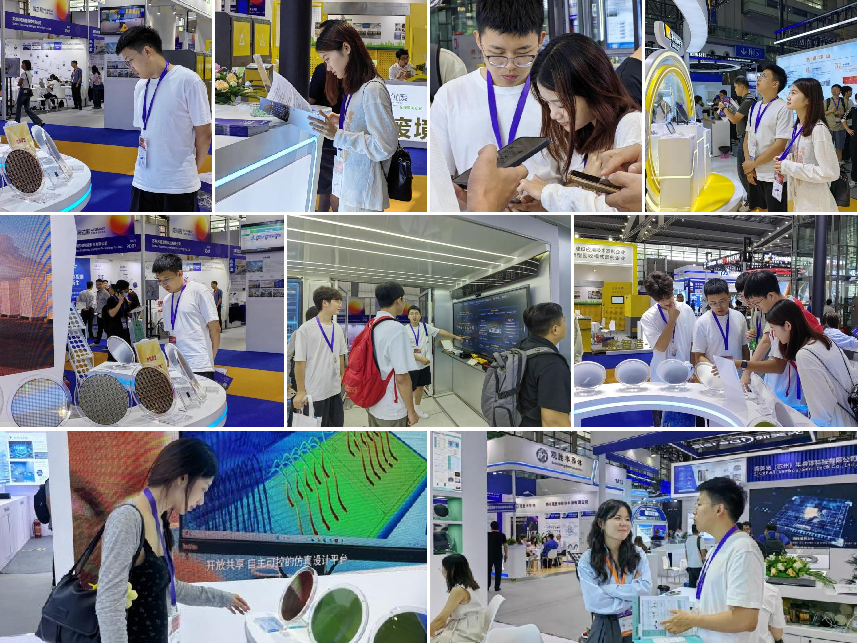
On the morning of October 16, 2025, the School of Electronic Science and Engineering (School of Microelectronics) of the South China Normal University Faculty of Engineering, in collaboration with the Deep Core Alliance, organized a delegation of over 70 faculty and student representatives to visit the "2025 Greater Bay Area Semiconductor Industry Ecosystem Expo" at the Shenzhen Convention and Exhibition Center (Futian). The delegation was led by teachers including Associate Researcher Liu Xiao, Specially-Appointed Researcher Deng Qiang, Specially-Appointed Associate Researcher Sun Yiming, and Pan Yuan. With the theme "Chips Ignite the Future, Intelligence Creates Ecosystem," the Expo comprehensively showcased the latest achievements across the semiconductor industry chain, presenting our faculty and students with a cutting-edge classroom that integrates industry and academia to inspire innovation.
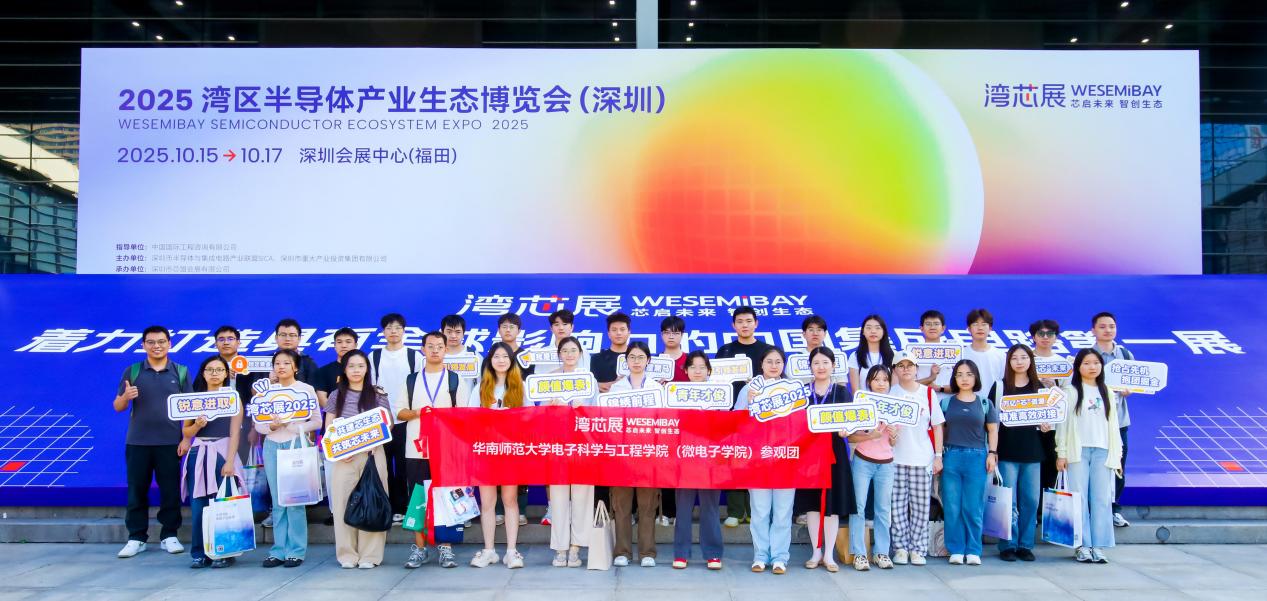
As an annual flagship event in the semiconductor industry, this year's Expo featured four major thematic exhibition areas: wafer manufacturing, compound semiconductors, IC design, and advanced packaging, covering the entire industry chain. The total exhibition scale reached 60,000 m², bringing together over 600 leading global semiconductor industry chain enterprises and innovative players. More than 30 professional forums were held concurrently during the event, providing an excellent platform for faculty and students to explore technological innovations and development trends alongside numerous industry leaders.
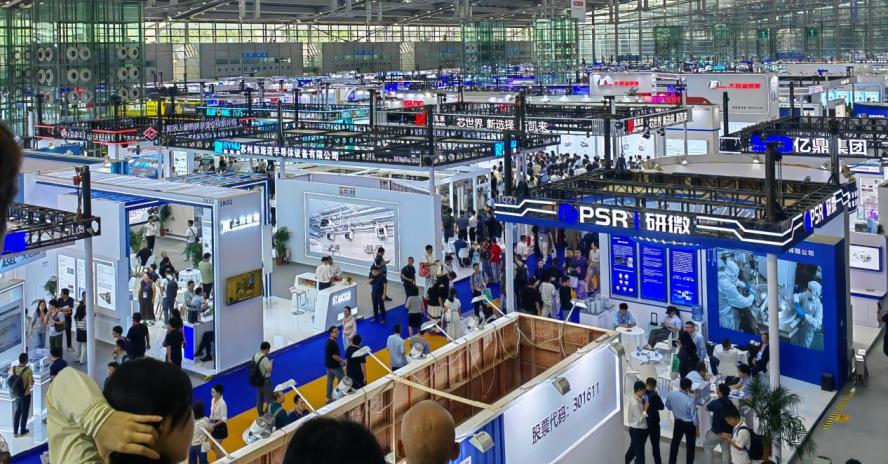

Inspiring Intelligence with 'Chips': Broadening Research Horizons and Enhancing Industrial Understanding
The visit closely followed the Expo's theme of "Chips Ignite the Future, Intelligence Creates Ecosystem," enabling faculty and students to gain a deep understanding of the collaborative development and ecosystem construction of the semiconductor industry across the entire chain from design and manufacturing to packaging. Through firsthand observation of exhibition areas such as wafer manufacturing equipment, compound semiconductor materials, and advanced packaging processes, participants not only engaged with the industry's most cutting-edge technological dynamics but also grasped the cross-disciplinary collaboration and systematic innovation philosophy embodied in "Intelligence Creates Ecosystem." The activity effectively facilitated the deep integration of theoretical teaching and industrial practice, further inspiring a sense of responsibility and mission among faculty and students to conduct research aligned with national strategies and industrial needs.
Student Reflections: Seeing the Future in the New 'Chip' Ecosystem
Students unanimously expressed that the gains from visiting the Expo exceeded expectations. "Chips Ignite the Future" is not just a slogan but is reflected in every innovative detail witnessed at the Expo—from third-generation semiconductors to Chiplet advanced packaging, the entire industry chain is evolving towards greater intelligence and sustainability. This has provided graduate students with clearer positioning for their research directions. The so-called "Intelligence Creates Ecosystem" signifies that semiconductors involve not only technological breakthroughs but also a collaborative, resource-sharing ecosystem. As students of the School of Microelectronics, we must not only master professional knowledge but also develop systemic thinking and collaborative innovation capabilities.
Promoting Teaching through Exhibitions, Advancing Learning through Industry: Continuously Building a New 'Chip' Talent Training System
Taking this visit as an opportunity, the School will more firmly advance its educational path of "Integrating Industry and Education, Co-building the Ecosystem." In the future, the School will further integrate the concept of industry-education integration into the entire talent development process; simultaneously, it will encourage more faculty and students to engage with industry frontlines, actively participate in industry forums and technical exchanges, promote the alignment of research topics with industrial needs, and dedicate itself to cultivating a new generation of integrated circuit talents equipped with systemic thinking, innovative capability, and ecosystem awareness, thereby contributing SCUN's wisdom and strength to the high-quality development of China's semiconductor industry.